← Back to Case Files
Case #00000116
closed
Evidence on file
The Bloop — Ultralow-Frequency Underwater Sound Detected Across the Pacific
Witness Account
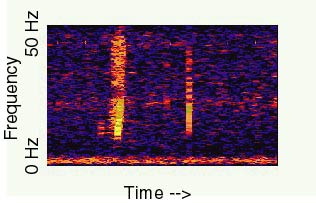
In 1997, NOAA's hydrophone arrays detected an extremely powerful ultralow-frequency sound rising in frequency over approximately one minute—a pattern scientists called the Bloop. The sound was detected by multiple hydrophones separated by thousands of miles, indicating the source was extraordinarily powerful, far louder than any known animal and louder than the largest recorded whale vocalization.
The Bloop was detected off the southern tip of South America. Scientists analyzing the recording noted that its frequency profile—the way the sound changed over time—was consistent with animal behavior rather than geological processes. This observation fueled speculation about an unknown massive deep-sea organism, given that the Bloop came from a region of deep ocean largely unexplored at depth.
In 2012, NOAA researchers re-examined the data and concluded the Bloop was consistent with the sound of ice breaking from the Antarctic ice shelf—a cryoseism or 'icequake.' The revised analysis proposed a natural explanation for the first time.
However, some researchers have noted that the 1997 recording differs from confirmed icequake recordings in several characteristics, and the debate continues among acoustic scientists. The Bloop captured widespread public imagination as a possible indicator of massive undiscovered deep-sea life and remains one of the most famous anomalous underwater recordings.
The Bloop was detected off the southern tip of South America. Scientists analyzing the recording noted that its frequency profile—the way the sound changed over time—was consistent with animal behavior rather than geological processes. This observation fueled speculation about an unknown massive deep-sea organism, given that the Bloop came from a region of deep ocean largely unexplored at depth.
In 2012, NOAA researchers re-examined the data and concluded the Bloop was consistent with the sound of ice breaking from the Antarctic ice shelf—a cryoseism or 'icequake.' The revised analysis proposed a natural explanation for the first time.
However, some researchers have noted that the 1997 recording differs from confirmed icequake recordings in several characteristics, and the debate continues among acoustic scientists. The Bloop captured widespread public imagination as a possible indicator of massive undiscovered deep-sea life and remains one of the most famous anomalous underwater recordings.
Community Assessment
Investigator Notes (0)
Create an account or sign in to add investigator notes.
No investigator notes yet — be the first to file one.