← Back to Case Files
Case #00000162
open
Evidence on file
Mongolian Death Worm — Desert Dwellers Describe Lethal Worm Beneath the Gobi
Unverified report — this account has not been independently confirmed. Treat all claims as witness testimony pending investigation.
Witness Account
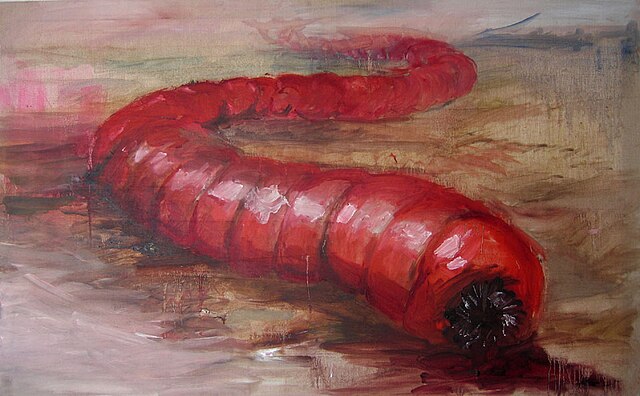
The olgoi-khorkhoi, or Mongolian Death Worm, is a cryptid described by local Mongolian communities as a large, red, sausage-shaped worm that inhabits the southern Gobi Desert. According to accounts, the creature can kill at a distance — either by spraying a lethal corrosive acid or by generating a powerful electric discharge — and its very touch is fatal.
References to the death worm appear in Mongolian oral tradition for centuries. The creatures are said to emerge from the sand in June and July, retreating underground during other months. They are reported to be attracted to the color yellow and to a plant called the goyo or saxaul. Touching the creature is said to cause an immediate and painful death.
The death worm first attracted Western attention when American paleontologist Roy Chapman Andrews mentioned native accounts of the creature during his 1926 Gobi Desert expeditions, though he was personally skeptical. Czech cryptozoologist Ivan Mackerle led multiple expeditions to the Gobi in the 1990s and 2000s, collecting accounts from nomadic families but finding no direct evidence.
Several other cryptozoologists have conducted investigations in the region, consistently finding willing witnesses with detailed, consistent accounts. Proposed explanations include a misidentified species of limbless lizard or a very large species of amphisbaenian. No specimen has been collected or photographed.
References to the death worm appear in Mongolian oral tradition for centuries. The creatures are said to emerge from the sand in June and July, retreating underground during other months. They are reported to be attracted to the color yellow and to a plant called the goyo or saxaul. Touching the creature is said to cause an immediate and painful death.
The death worm first attracted Western attention when American paleontologist Roy Chapman Andrews mentioned native accounts of the creature during his 1926 Gobi Desert expeditions, though he was personally skeptical. Czech cryptozoologist Ivan Mackerle led multiple expeditions to the Gobi in the 1990s and 2000s, collecting accounts from nomadic families but finding no direct evidence.
Several other cryptozoologists have conducted investigations in the region, consistently finding willing witnesses with detailed, consistent accounts. Proposed explanations include a misidentified species of limbless lizard or a very large species of amphisbaenian. No specimen has been collected or photographed.
Community Assessment
Investigator Notes (0)
Create an account or sign in to add investigator notes.
No investigator notes yet — be the first to file one.