← Back to Case Files
Case #00000178
open
Evidence on file
Rosenheim Poltergeist — German Lawyer's Office Investigated by Physicists as Lights Explode and Calls Made to No Number
Unverified report — this account has not been independently confirmed. Treat all claims as witness testimony pending investigation.
Witness Account
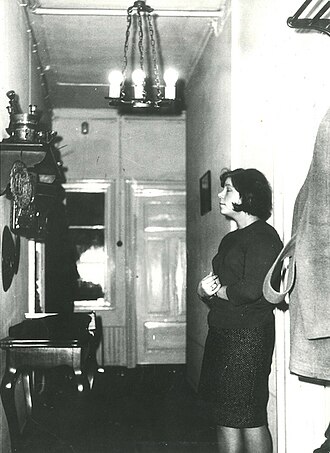
In 1967, a law office in Rosenheim, Bavaria, Germany became the site of one of the most scientifically scrutinized poltergeist cases in history. The phenomena began with unexplained spikes in electrical consumption and escalated to neon lights swinging and exploding, telephone calls being made to no one and to the speaking clock — sometimes four per minute — and objects moving of their own accord.
Because the phenomena were unusual in their primarily technological nature, physicist Friedbert Karger and parapsychologist Gerhard Zicha of the Max Planck Institute were invited to investigate. They installed monitoring equipment that confirmed the anomalous electrical fluctuations were occurring independent of any tampering. Measuring instruments showed voltage surges that preceded lamp explosions without corresponding to power supply fluctuations.
The phenomena appeared to center on a young secretary named Anne-Marie Schneider, a 19-year-old who had recently begun work at the office. When she entered the building, activity increased. When she was absent, it ceased. Pictures on the walls rotated as she passed. A lamp crashed down on film with no apparent means of support failure.
After Schneider left her employment at the office, the phenomena ceased there entirely but followed her to subsequent workplaces in attenuated form. The Rosenheim case is significant because institutional physicists using calibrated instrumentation confirmed that anomalous electrical activity occurred and that conventional explanations were inadequate. It remains one of the most physically well-documented poltergeist investigations ever conducted.
Because the phenomena were unusual in their primarily technological nature, physicist Friedbert Karger and parapsychologist Gerhard Zicha of the Max Planck Institute were invited to investigate. They installed monitoring equipment that confirmed the anomalous electrical fluctuations were occurring independent of any tampering. Measuring instruments showed voltage surges that preceded lamp explosions without corresponding to power supply fluctuations.
The phenomena appeared to center on a young secretary named Anne-Marie Schneider, a 19-year-old who had recently begun work at the office. When she entered the building, activity increased. When she was absent, it ceased. Pictures on the walls rotated as she passed. A lamp crashed down on film with no apparent means of support failure.
After Schneider left her employment at the office, the phenomena ceased there entirely but followed her to subsequent workplaces in attenuated form. The Rosenheim case is significant because institutional physicists using calibrated instrumentation confirmed that anomalous electrical activity occurred and that conventional explanations were inadequate. It remains one of the most physically well-documented poltergeist investigations ever conducted.
Community Assessment
Investigator Notes (0)
Create an account or sign in to add investigator notes.
No investigator notes yet — be the first to file one.