← Back to Case Files
Case #00000206
open
Evidence on file
Antikythera Mechanism — 2,000-Year-Old Astronomical Computer Defies Ancient Technology Timeline
Unverified report — this account has not been independently confirmed. Treat all claims as witness testimony pending investigation.
Witness Account
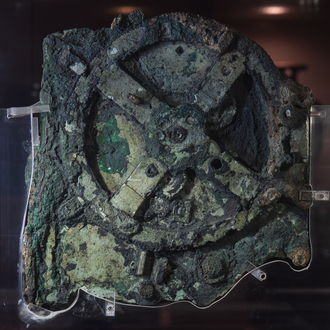
In 1900, sponge divers discovered an ancient shipwreck off the Greek island of Antikythera. Among the artifacts recovered was an encrusted lump of corroded bronze that, after decades of study, proved to be the most sophisticated mechanical device from the ancient world — an orrery and astronomical calculator of extraordinary complexity that appears to have no precedent in the historical record.
The Antikythera Mechanism, dated to approximately 100 BCE, uses a system of at least 37 gears to model and predict the motions of the sun and moon, lunar phases, solar and lunar eclipses, and the cycles of the Panhellenic Games. Later analysis revealed it also tracked the movements of the five known planets. The device is operated by a hand crank and displays its results on multiple dials.
The mechanical sophistication required to produce the device was not matched in European technology until the 14th century, when mechanical astronomical clocks of comparable complexity began to appear in cathedral towers. The gap of approximately 1,400 years between the Antikythera Mechanism and the next devices of comparable sophistication is deeply problematic for standard narratives of technological development.
Modern imaging techniques including X-ray tomography have continued to reveal new details and inscriptions. The mechanism's capabilities appear to have been even more extensive than initially understood. Where this technology came from, why it apparently vanished entirely, and whether it represents a lost tradition of mechanical engineering are questions that continue to puzzle historians of science.
The Antikythera Mechanism, dated to approximately 100 BCE, uses a system of at least 37 gears to model and predict the motions of the sun and moon, lunar phases, solar and lunar eclipses, and the cycles of the Panhellenic Games. Later analysis revealed it also tracked the movements of the five known planets. The device is operated by a hand crank and displays its results on multiple dials.
The mechanical sophistication required to produce the device was not matched in European technology until the 14th century, when mechanical astronomical clocks of comparable complexity began to appear in cathedral towers. The gap of approximately 1,400 years between the Antikythera Mechanism and the next devices of comparable sophistication is deeply problematic for standard narratives of technological development.
Modern imaging techniques including X-ray tomography have continued to reveal new details and inscriptions. The mechanism's capabilities appear to have been even more extensive than initially understood. Where this technology came from, why it apparently vanished entirely, and whether it represents a lost tradition of mechanical engineering are questions that continue to puzzle historians of science.
Community Assessment
Investigator Notes (0)
Create an account or sign in to add investigator notes.
No investigator notes yet — be the first to file one.