← Back to Case Files
Case #00000158
open
Evidence on file
Beast of Gévaudan — Wolf-Like Monster Kills Hundreds in 18th-Century France
Unverified report — this account has not been independently confirmed. Treat all claims as witness testimony pending investigation.
Witness Account
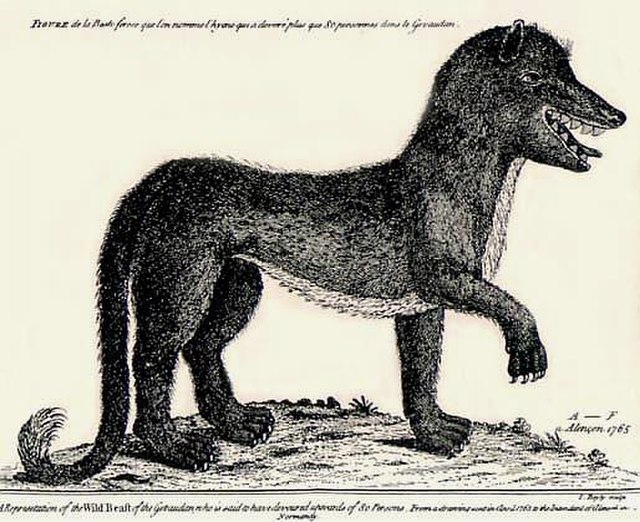
Between 1764 and 1767, a series of brutal attacks in the Gévaudan region of south-central France killed and partially devoured an estimated 100 to 113 people and injured at least 49 others, making it one of the deadliest sequences of animal attacks in recorded history. The attacking creature was described as large, wolf-like, red or tawny in color, with enormous teeth, and far more aggressive than any known wolf.
The attacks began in June 1764 and created widespread terror throughout the region. Survivors described a creature much larger than a wolf, with a broad chest, long tail, and a pelt resistant to musket balls. The creature reportedly targeted humans specifically and showed unusual cunning in avoiding hunting parties.
King Louis XV sent professional hunters and eventually the royal arquebusiers to kill the beast. Several large wolves were killed and displayed as the creature responsible, only for the attacks to resume. In June 1767, a local hunter named Jean Chastel killed a large, unusual wolf-like animal and the attacks ceased.
Debate continues about what the Beast of Gévaudan actually was. Theories include an unusually large wolf, a wolf-dog hybrid, a hyena, a prehistoric survivor, or even a trained animal used by a human attacker. The case inspired the modern concept of the werewolf legend and has never been definitively explained.
The attacks began in June 1764 and created widespread terror throughout the region. Survivors described a creature much larger than a wolf, with a broad chest, long tail, and a pelt resistant to musket balls. The creature reportedly targeted humans specifically and showed unusual cunning in avoiding hunting parties.
King Louis XV sent professional hunters and eventually the royal arquebusiers to kill the beast. Several large wolves were killed and displayed as the creature responsible, only for the attacks to resume. In June 1767, a local hunter named Jean Chastel killed a large, unusual wolf-like animal and the attacks ceased.
Debate continues about what the Beast of Gévaudan actually was. Theories include an unusually large wolf, a wolf-dog hybrid, a hyena, a prehistoric survivor, or even a trained animal used by a human attacker. The case inspired the modern concept of the werewolf legend and has never been definitively explained.
Community Assessment
Investigator Notes (0)
Create an account or sign in to add investigator notes.
No investigator notes yet — be the first to file one.