← Back to Case Files
Case #00000166
open
Evidence on file
Emela-ntouka — Hornless Elephant-Killing Creature of the Congo Swamps
Unverified report — this account has not been independently confirmed. Treat all claims as witness testimony pending investigation.
Witness Account
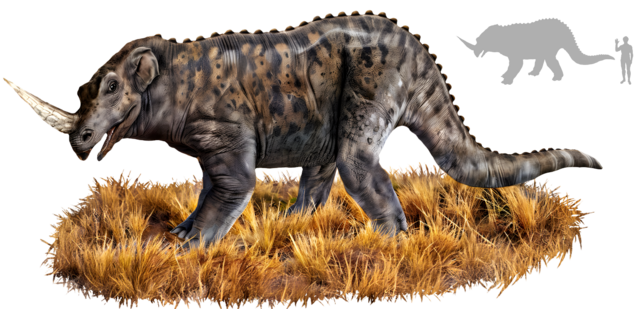
The emela-ntouka, whose name means "killer of elephants" in the Lingala language, is a cryptid reported from the remote swamps and rivers of the Republic of the Congo and the Central African Republic. It is described by Pygmy tribes and other indigenous peoples as a large, semi-aquatic beast resembling a rhinoceros but with a single long horn projecting from its nose, a heavy tail like a crocodile, and the body size of a hippopotamus or elephant.
Accounts consistently emphasize that the creature is highly aggressive and will attack and kill elephants, hippopotami, and humans without apparent provocation. The single horn is used to disembowel prey. Witnesses describe the creature as grayish-brown and making a low, snorting sound.
The emela-ntouka was formally described to Western audiences by zoologist Karl Shuker and by researchers investigating the related mokele-mbembe legend. Expeditions into the Congo Basin in the 20th century collected extensive testimony from indigenous people who claimed direct knowledge of the creature.
Cryptozoologists have proposed that the emela-ntouka might represent a surviving ceratopsian dinosaur, an unknown species of rhinoceros adapted to aquatic life, or a surviving population of Embolotherium, a prehistoric brontothere with a large nasal horn. The density and inaccessibility of the Congo swamps makes thorough investigation difficult. No physical evidence has been secured.
Accounts consistently emphasize that the creature is highly aggressive and will attack and kill elephants, hippopotami, and humans without apparent provocation. The single horn is used to disembowel prey. Witnesses describe the creature as grayish-brown and making a low, snorting sound.
The emela-ntouka was formally described to Western audiences by zoologist Karl Shuker and by researchers investigating the related mokele-mbembe legend. Expeditions into the Congo Basin in the 20th century collected extensive testimony from indigenous people who claimed direct knowledge of the creature.
Cryptozoologists have proposed that the emela-ntouka might represent a surviving ceratopsian dinosaur, an unknown species of rhinoceros adapted to aquatic life, or a surviving population of Embolotherium, a prehistoric brontothere with a large nasal horn. The density and inaccessibility of the Congo swamps makes thorough investigation difficult. No physical evidence has been secured.
Community Assessment
Investigator Notes (0)
Create an account or sign in to add investigator notes.
No investigator notes yet — be the first to file one.