← Back to Case Files
Case #00000169
open
Evidence on file
Dancing Plague of 1518 — Hundreds Dance Uncontrollably for Weeks, Many Die
Unverified report — this account has not been independently confirmed. Treat all claims as witness testimony pending investigation.
Witness Account
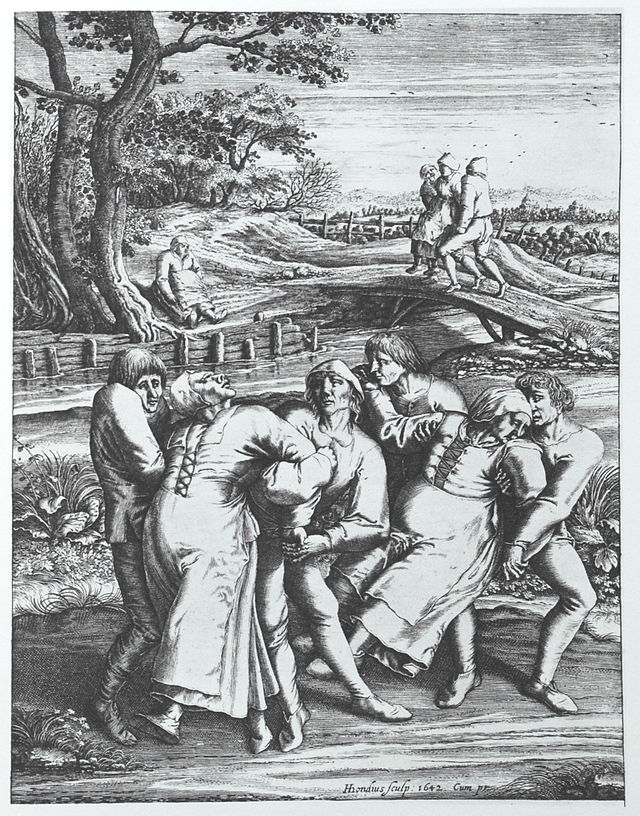
In July 1518, a woman named Frau Troffea stepped into the street in Strasbourg, Alsace (now France) and began to dance. She danced without stopping for four to six days. Within a week, approximately 34 others had joined her. By the height of the event, roughly 400 people were dancing compulsively in the streets.
The dancers could not stop, even as their feet bled and their bodies gave out. Some collapsed from exhaustion and cardiac events. Contemporary accounts suggest that perhaps 15 people a day were dying at the peak of the episode. The city authorities consulted physicians who concluded the cause was "hot blood" and prescribed more dancing as a cure — even hiring musicians and constructing a stage.
The episode gradually ended by September 1518. Its cause remains one of the most debated mysteries in medieval history. Theories include ergotism from moldy rye bread (though ergotism typically causes convulsions, not coordinated movement), mass hysteria triggered by extreme stress after years of famine and disease, and religious hysteria linked to a local cult of St. Vitus.
Historian John Waller has extensively researched the Dancing Plague and argues it was a case of psychogenic illness — mass psychosomatic disorder — exacerbated by the city's misguided response of encouraging more dancing. The Dancing Plague of 1518 remains the most severe and best-documented episode of dance mania in history.
The dancers could not stop, even as their feet bled and their bodies gave out. Some collapsed from exhaustion and cardiac events. Contemporary accounts suggest that perhaps 15 people a day were dying at the peak of the episode. The city authorities consulted physicians who concluded the cause was "hot blood" and prescribed more dancing as a cure — even hiring musicians and constructing a stage.
The episode gradually ended by September 1518. Its cause remains one of the most debated mysteries in medieval history. Theories include ergotism from moldy rye bread (though ergotism typically causes convulsions, not coordinated movement), mass hysteria triggered by extreme stress after years of famine and disease, and religious hysteria linked to a local cult of St. Vitus.
Historian John Waller has extensively researched the Dancing Plague and argues it was a case of psychogenic illness — mass psychosomatic disorder — exacerbated by the city's misguided response of encouraging more dancing. The Dancing Plague of 1518 remains the most severe and best-documented episode of dance mania in history.
Community Assessment
Investigator Notes (0)
Create an account or sign in to add investigator notes.
No investigator notes yet — be the first to file one.